Leave a little room on the page.
A notebook without a system, a streak, or a plan to become more productive.
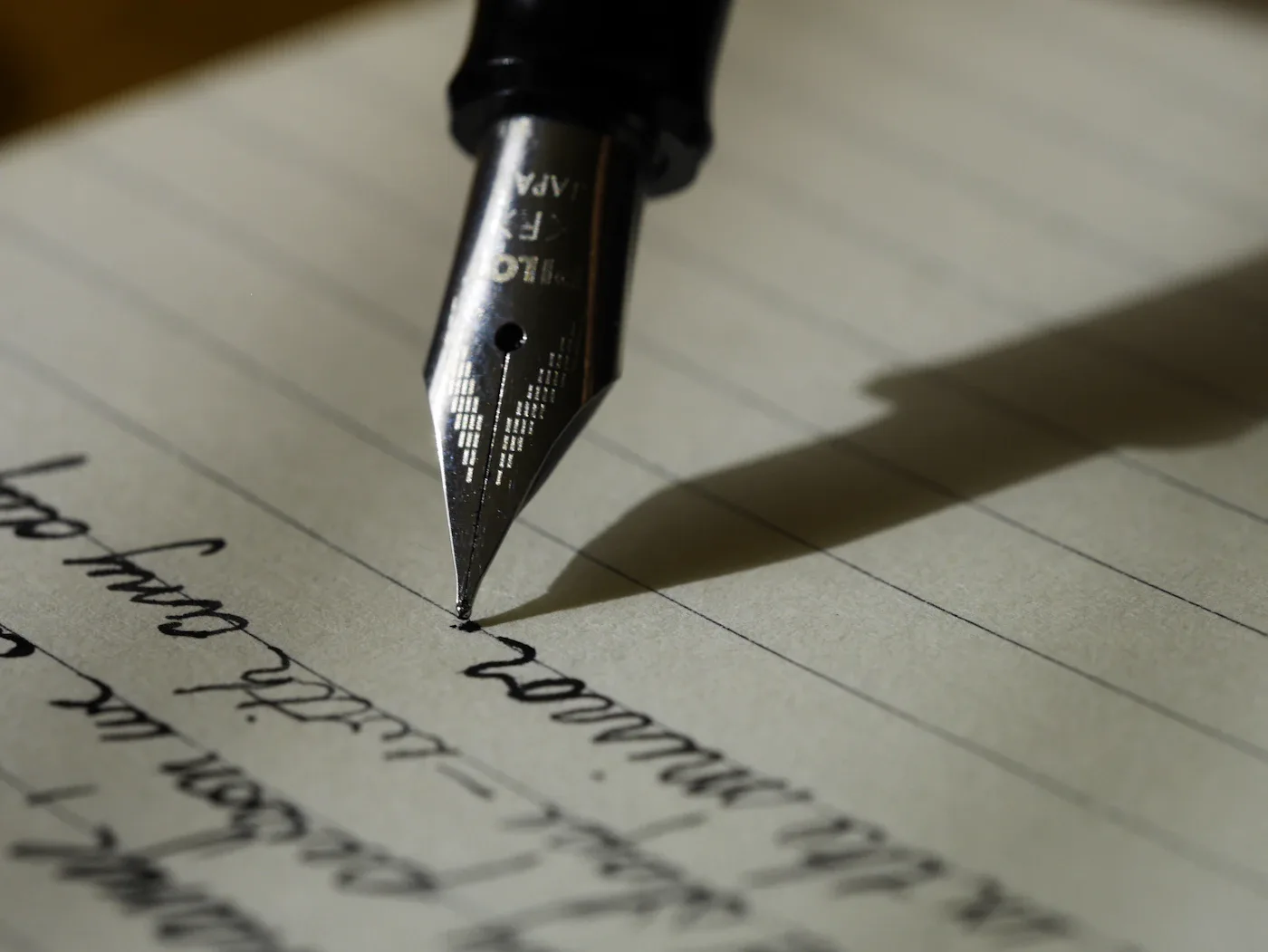
The first page of a new notebook can feel absurdly important. It seems to want a good idea, beautiful handwriting, or a promise about how the rest of the pages will be used. Sometimes the easiest way to begin is to write something deliberately ordinary: the date, the weather, what you had for lunch.
Now it is a notebook someone has written in. The difficult part is over.
This is an invitation to keep a notebook that does not improve you. It can hold fragments, temporary thoughts, and things you might otherwise forget. It does not need a method clever enough to explain to anyone else.
Use the one you have
An expensive notebook can be a pleasure, but it can also make every mark feel like a decision. A half-used pad, a small exercise book, or a few folded sheets can be easier to approach. Use a pen that writes comfortably and does not need special treatment.
If you are buying something, consider where it will live. A notebook that fits your actual bag is more useful than one chosen for an imagined life. Paper that takes your usual pen without fuss matters more than the color of the cover.
Leave the first few pages blank if that helps. There is no rule that says a notebook must be used in order. The object belongs to you, not the other way around.
Collect details rather than conclusions
Write down a phrase you overheard in a public place without identifying anyone. Note a color combination. Sketch the outline of a cup. Describe a sound in a few words, even if you are not sure the description makes sense.
Fragments are useful because they do not ask you to know what you think yet. A complete essay wants a point. A note can simply say: afternoon light, green door, orange peel.
Avoid recording private information about other people, and be thoughtful about what you leave in a notebook you carry around. Everyday observation does not require collecting someone’s personal details.
Make it easy to return
Keep the notebook somewhere you naturally pause. Beside the kettle, inside your bag, or next to the chair where you read. If it takes a search to find it, you are less likely to use it when a small thought arrives.
You do not need to write every day. Dates can jump from Tuesday to three weeks later. Blank space is not evidence that you are doing it wrong. It is part of the book’s rhythm.
When you do return, begin wherever you are. You do not owe the missing days a summary. A notebook is not a witness you need to satisfy.
Read backward occasionally
After a while, turn back a few pages. You may notice that you keep returning to the same kind of detail: certain colors, small buildings, overheard language, recipes you want to attempt. Or you may find only a shopping list and a drawing you no longer understand.
Both belong. The notebook is a record of attention in its ordinary, uneven form.
If a note becomes useful, move it somewhere you can find it again. If it never does, it has still served a purpose by giving a passing thought somewhere to land. Close the cover. There is room for more whenever you feel like it.
Keep this one for a quiet moment.